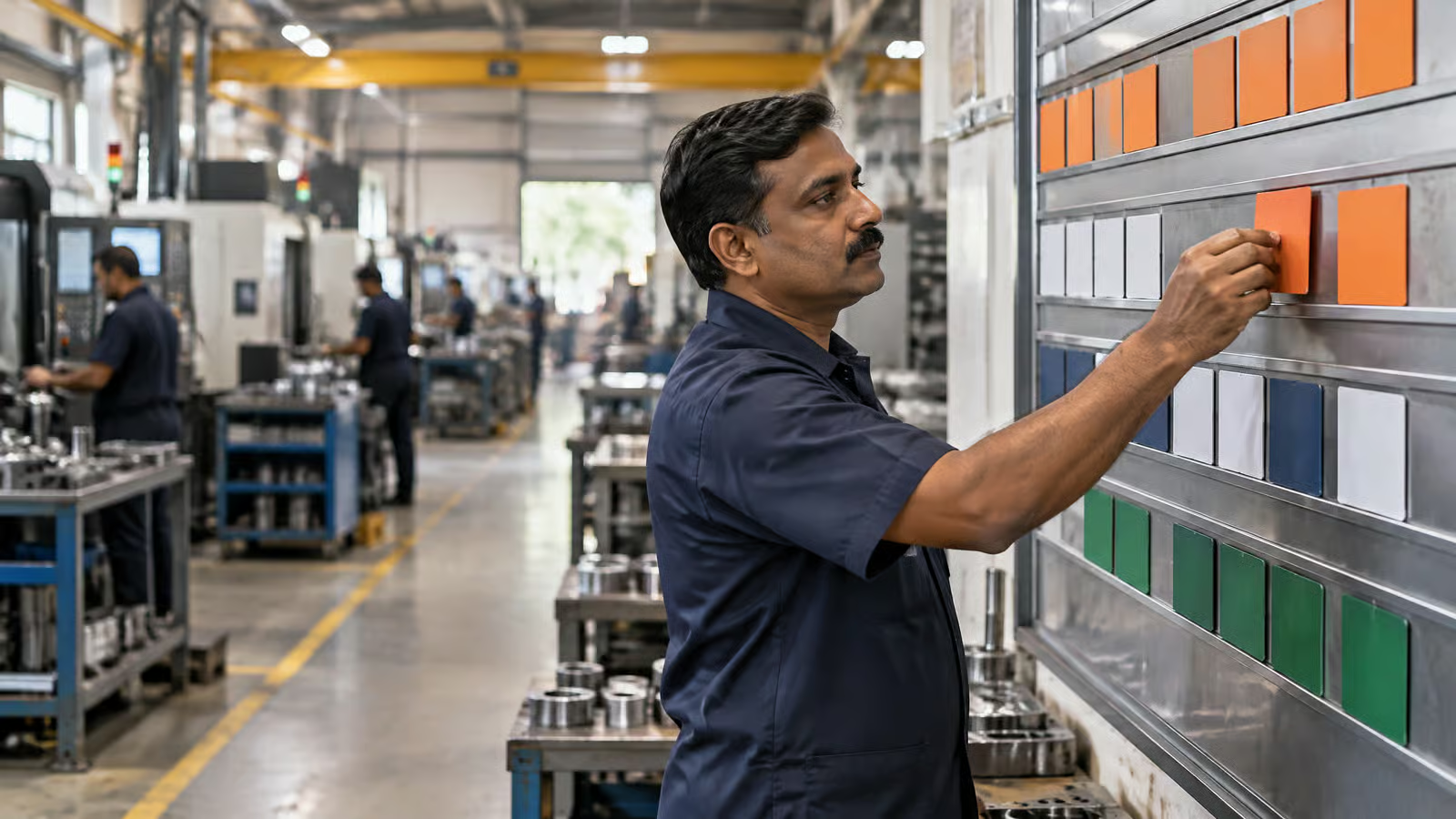
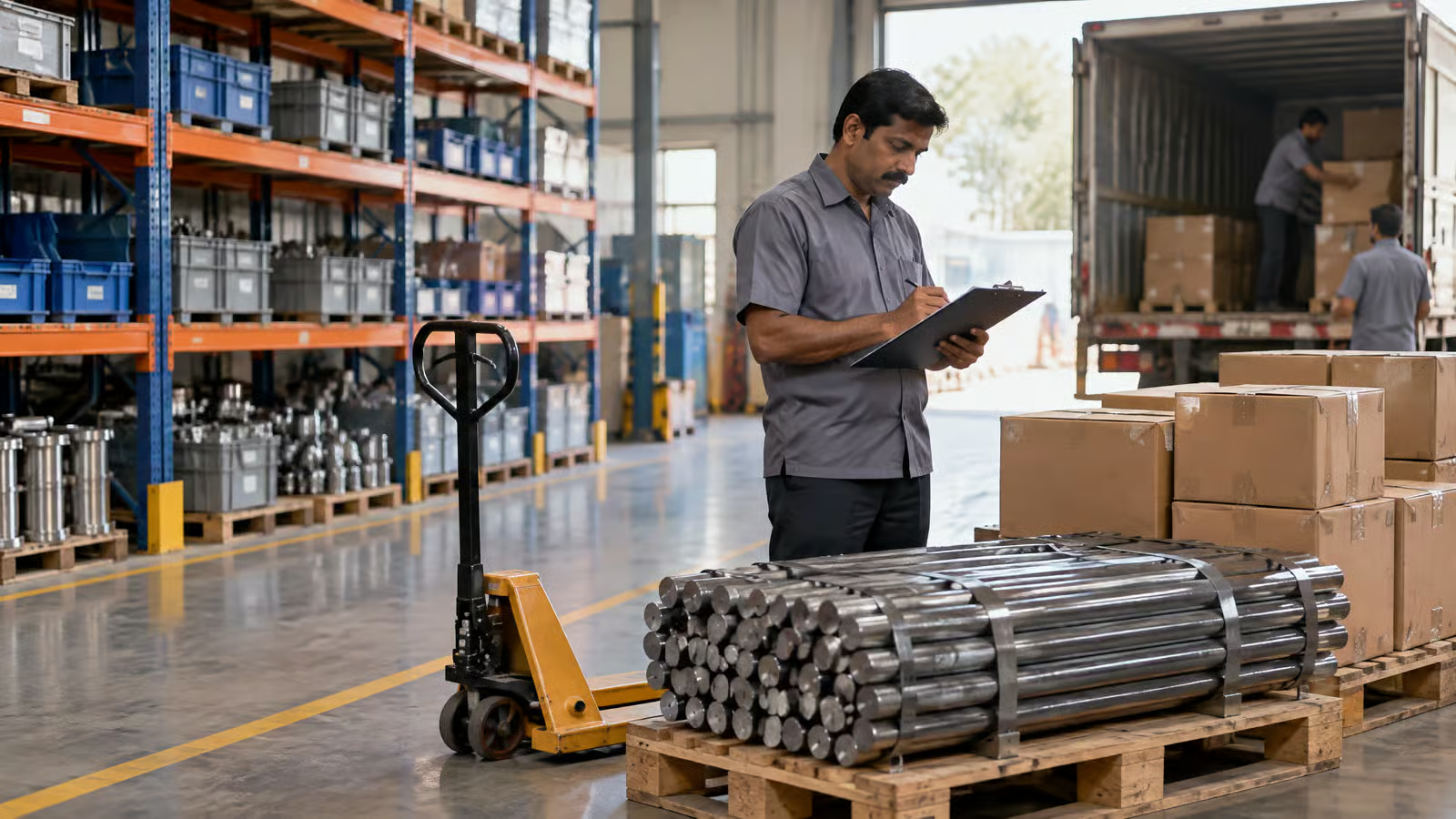
Contract manufacturing management means keeping track of many customers' orders, specifications, material and documents at the same time. For job workers in India, it also means matching every inward and outward job work challan, tracking customer-owned material and meeting GST job work rules. AI helps by reading orders and challans, reconciling material and preparing dispatch papers in each customer's format.
What makes contract manufacturing and job work hard to manage?
Contract manufacturing and job work are hard to manage because every customer brings its own material, drawings, formats and rules, and all of them must be tracked separately. Common difficulties include:
- Many customers, each with its own PO format, document requirements and payment habits
- Specifications and revisions that change, with the risk of making parts to an old drawing
- Customer-supplied material that must be accounted for down to the last kilogram
- Partial returns, where a lot comes back in several dispatches over weeks
- Scrap and process loss that customers question
- Many small dispatches, each needing a challan, invoice and sometimes test reports
- Payment disputes that start from a mismatch between the customer's records and yours
What is the difference between a contract manufacturer and a job worker?
A job worker processes material owned by the customer and charges for the work, while a contract manufacturer usually buys the material and sells finished goods made to the customer's design. Many factories do both.
Job worker | Contract manufacturer | |
|---|---|---|
Who owns the material | The customer (principal) | Usually the manufacturer |
What is invoiced | Job work charges | Finished goods |
Main movement document | Delivery challan from the principal; job worker's challan on return | Tax invoice |
Key tracking need | Customer material balance and return dates | Material cost, specs and delivery |
What are the GST rules for job work?
Under GST, a principal can send inputs and capital goods to a job worker without paying tax, under a delivery challan, but they must come back within set time limits. Section 143 of the CGST Act sets these limits for inputs and capital goods, and some tools such as moulds and dies are treated differently. If goods are not returned or supplied onward in time, they can be treated as supplied by the principal, so track every challan against its due date.
Other points to track:
- The principal reports goods sent to and received from job workers in form ITC-04, at a frequency that depends on the principal's turnover.
- For job work movements between states, an e-way bill may be required whatever the value of the goods; check the current rules with your CA.
- Each movement needs a proper challan.
You can check current rules on the GST portal. This is a general overview; confirm your position with your CA.
How do you track customer material in job work?
Track customer material with a running balance for each customer and material type: what came in, what went out in finished parts, what was returned as scrap and what is still in process.
Example: A job worker receives 5,000 kg of steel from one customer in a quarter. All figures are illustrative.
Item | Quantity |
|---|---|
Material received on the customer's challans | 5,000 kg |
Used in parts dispatched back | 3,800 kg |
Scrap and turnings returned | 600 kg |
Material in process | 400 kg |
Balance at the factory | 200 kg |
Comparing actual consumption per piece with an agreed norm shows whether process loss is within limits. When a customer asks for a reconciliation, this table answers the question in minutes instead of days.
How do you manage many customers' specifications?
Manage specifications with one register by customer, part and revision, and make sure the shop floor always works from the current revision.
- Keep a record of every drawing and specification with its revision number and date.
- Remove old revisions from the floor when a new one arrives.
- Note each customer's inspection, packing and document requirements, such as test reports, certificates or labels.
- Check the revision on every new PO against your register before production starts.
How can AI help contract manufacturers and job workers?
AI helps by handling the paperwork and reconciliation that grow with every new customer. The main tasks are:
- Reading customer POs and challans, whatever the format, using document AI.
- Updating material balances automatically from inward and outward challans.
- Matching challans, so every outward return is linked to the inward challan it belongs to.
- Flagging time limits, such as material that has been at the factory for close to a year.
- Preparing dispatch documents in each customer's own format, checked for mismatches.
- Answering status questions from customers on WhatsApp, as explained in our guide to WhatsApp chatbots for manufacturers.
- Following up on payments customer by customer through receivables follow-up.
Osvik's dispatch documentation automation prepares challans, invoices and packing lists from one order and checks that they match. Challan matching and material balances can be added as a custom AI solution. Textile job workers face many of the same issues; see how we approach textiles.
Which numbers should a job work business track?
Track a few numbers by customer every month, because problems in job work usually belong to specific customers.
Measure | What it shows |
|---|---|
Material balance variance | Whether customer material is fully accounted for |
Material near the return time limit | GST risk and possible disputes |
On-time delivery | Service level per customer |
Rejections and rework | Quality per customer and part |
Days to payment | Which customers tie up your cash |
Profit per customer | Whether each customer is worth the effort |
For pricing job work profitably, see our guide on how to price custom manufacturing jobs.
Start with your top three customers
Build a material balance for your three largest customers from last quarter's challans. If any balance does not reconcile, you have found both a risk and the first task to automate.
If you want challans, balances and dispatch papers handled for every customer automatically, book a free call. If a task repeats in your factory, tell us about it.
Frequently asked questions
What is contract manufacturing management?
Contract manufacturing management is organising orders, specifications, material, production and documents for many customers who outsource manufacturing to you. It includes tracking customer-supplied material, controlling drawing revisions, preparing customer-specific dispatch documents and following up on payments.
What is the difference between a contract manufacturer and a job worker?
A job worker processes material owned by the customer and charges only for the work done. A contract manufacturer usually buys the material and sells finished goods made to the customer's design. The documents, GST treatment and tracking needs differ for each.
What is the time limit for returning goods sent for job work?
Under Section 143 of the CGST Act, inputs and capital goods sent for job work must come back within set time limits, and some tools such as moulds and dies are treated differently. Check the current limits with your CA, and track every challan against its due date.
What is ITC-04?
ITC-04 is the GST form in which a principal reports goods sent to and received back from job workers. How often it must be filed depends on the principal's turnover. Job workers can help their customers by keeping accurate challan records.
How do job workers track customer material?
Keep a running balance for each customer and material type: quantity received on inward challans, quantity used in parts dispatched back, scrap returned, material in process and the balance at the factory. Compare actual consumption with agreed norms to explain losses.
Is an e-way bill required for job work?
For movements of goods to or from a job worker in another state, an e-way bill is generally required regardless of the value of the goods. Within a state, the usual value threshold and state rules apply. Confirm the details for your movements with your CA.
Want this for your factory?
A free 30-minute call. Bring one real enquiry, sheet or report.