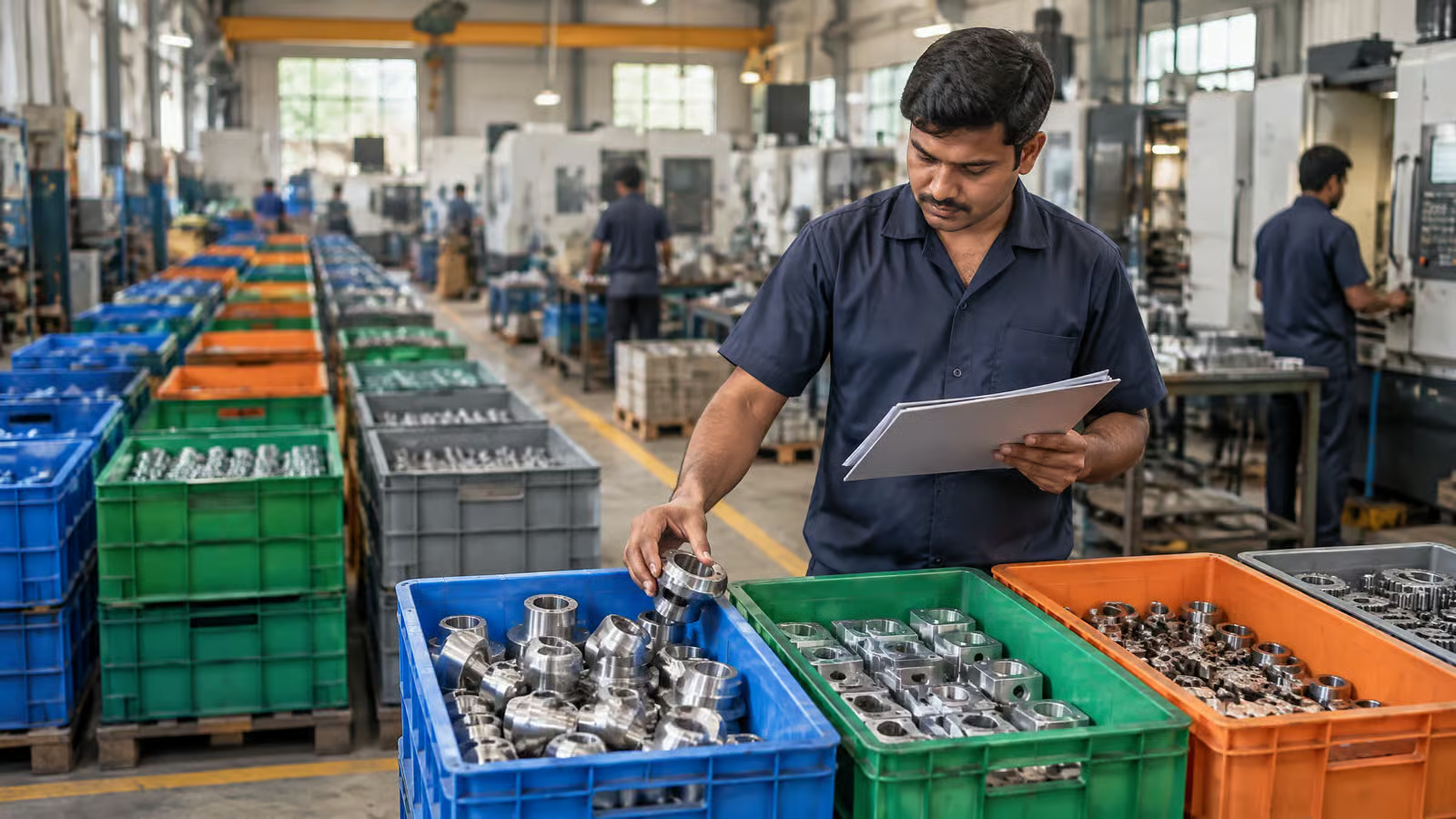
Procurement automation uses software and AI to handle the repeated steps of buying for a factory: raising indents, getting quotes, preparing purchase orders, chasing suppliers, recording goods receipt and matching bills. For manufacturers, it can work on top of Tally, Excel, email and WhatsApp, with the purchase team approving every order and payment.
What is procurement automation?
Procurement automation is the use of software to carry out the routine steps of buying, from a department's request to paying the supplier, with people approving the important decisions. This full cycle is often called procure-to-pay.
In a typical Indian factory, buying runs on phone calls, WhatsApp messages, an Excel comparative statement and Tally entries made days after the material arrives. Automation does not replace this with a new system. It connects the steps and does the typing, chasing and checking between them.
What are the steps from indent to GRN?
The purchase cycle in a factory runs through eight steps, from an internal request to a checked supplier bill. Here is each step, what usually goes wrong and what automation can do.
Step | What happens | What goes wrong today | What automation does |
|---|---|---|---|
1. Indent | A department requests material | Requests arrive by phone or WhatsApp and get missed | Captures indents from WhatsApp or a form into one register |
2. RFQ to suppliers | Purchase asks suppliers for quotes | Same email typed to five suppliers | Sends RFQs to approved suppliers for that item |
3. Comparative statement | Quotes compared side by side | Rates copied from PDFs into Excel by hand | Reads supplier quotes and builds the comparison |
4. Purchase order | PO raised on the chosen supplier | Typed again in Tally or Excel | Drafts the PO for approval |
5. Follow-up | Supplier reminded about delivery | Daily calls, forgotten orders | Sends reminders before and after the promised date |
6. GRN | Stores records what arrived | Entered late or not at all | Reads the supplier challan and prepares the GRN |
7. Vendor bill | Supplier invoice entered | Typed manually, mismatches missed | Reads the bill and prepares the Tally entry |
8. Three-way match | PO, GRN and bill checked against each other | Rate and quantity differences paid by mistake | Flags every difference before payment |
A few terms, in plain words: an indent is an internal request for material; a comparative statement puts supplier quotes side by side; a GRN (goods receipt note) records what material arrived, how much and in what condition.
Where does time get lost in factory purchasing?
Time gets lost in the gaps between steps: chasing people, copying data and finding documents. The most common drains are:
- Calling suppliers every morning to ask about pending deliveries
- Retyping supplier quotations into a comparison sheet
- Searching WhatsApp for the photo of a challan or a rate confirmation
- Urgent purchases at higher prices because a shortage was spotted late
- Resolving bill disputes weeks after the material was used
How does AI help at each step of procurement?
AI helps most with reading documents, sending reminders and checking numbers, which are the parts that repeat on every order.
- Indents: a supervisor sends "Need 200 kg MS round 32 mm by Friday" on WhatsApp, and it becomes a structured indent.
- Reorder suggestions: AI compares stock with consumption and suggests what to buy before it runs out. If your demand is seasonal, a demand forecast makes these suggestions better.
- RFQs and comparisons: AI sends RFQs to approved suppliers and reads their PDF or Excel quotes into one comparative statement.
- Purchase orders: it drafts the PO with agreed rates, terms and delivery dates for approval.
- Supplier follow-ups: polite reminders on WhatsApp or email before the due date, with replies recorded. Material status then feeds your production schedule.
- GRN and bills: AI reads the challan and invoice, prepares the GRN and the purchase entry for Tally, and flags differences.
Supplier follow-ups and vendor bill entry are two of the automations Osvik most often builds as custom AI solutions, because every factory's supplier list and approval rules are different.
What is three-way matching, and why does it matter?
Three-way matching checks that the purchase order, the goods receipt and the supplier bill agree on item, quantity and rate before you pay. It catches overbilling and short supply that are easy to miss when bills are entered in a rush.
Example: You order 500 kg of steel at ₹92 per kg. The GRN records 480 kg received. The supplier's bill shows 500 kg at ₹94 per kg.
Check | PO | GRN | Bill | Result |
|---|---|---|---|---|
Quantity | 500 kg | 480 kg | 500 kg | Billed 20 kg more than received |
Rate | ₹92 per kg | ₹94 per kg | ₹2 per kg above the agreed rate | |
Amount | ₹47,000 | Should be 480 × ₹92 = ₹44,160 |
The difference is ₹2,840 on one bill, before GST. Across hundreds of bills a year, unchecked differences add up.
Matching also protects your GST input tax credit. Input tax credit generally depends on suppliers reporting their invoices correctly on the GST portal, so checking bills against GSTR-2B each month helps you spot suppliers who have not reported their invoices.
How should you handle payments to MSME suppliers?
If you buy from micro or small enterprises registered on Udyam, pay them on time. The law sets maximum payment terms for these suppliers, and income tax rules can delay your deduction for amounts you pay them late. Ask your CA for the current rules and time limits.
Procurement automation can record each supplier's MSME status, calculate the last payment date for every bill and remind your accounts team before it passes. You can check a supplier's status on the Udyam registration portal.
What do you need to automate procurement?
You need a clean item list, an approved supplier list and a few basic rules. Most factories already have these in some form.
- Item master: consistent item names and codes, as in Tally
- Approved suppliers: who can supply which items
- Rate contracts or last rates: to check quotes and bills
- Lead times: how many days each supplier usually takes
- Reorder levels: the stock level at which each item should be reordered
- Approval limits: who can approve which purchase value
Where should you start with procurement automation?
Start with the step that costs you the most time or money. For most factories, that is one of two places:
- Supplier follow-ups, if your purchase team spends hours on the phone and production stops for material. It is quick to set up and the results show within weeks.
- Vendor bill entry and three-way matching, if you suspect overbilling or your accounts team spends days entering bills. It saves typing and protects money.
Indents, RFQs and comparative statements can follow once the first step works.
What should stay with your purchase team?
Judgement and relationships stay with people. Automation should not decide which supplier to trust, how hard to negotiate or whether to accept material with a quality issue. Your team also approves every purchase order and payment, within the limits you set. Automation gives them the time and the clean information to do that well.
Start with the calls your team makes every morning
Ask your purchase team to list every supplier call they make in one day, and why. That list is usually the clearest picture of what procurement automation should do first.
If you want help turning it into a working system, book a free call. We will look at how your buying works today and suggest the first step. If a task repeats in your factory, tell us about it. For more ideas, see our list of 25 AI use cases in manufacturing.
Frequently asked questions
What is procurement automation?
Procurement automation uses software and AI to handle routine buying steps, such as capturing indents, sending RFQs, preparing purchase orders, following up with suppliers, recording goods receipt and matching bills. People still approve orders and payments. For manufacturers, it can work with Tally, Excel, email and WhatsApp.
What is the difference between an indent and a purchase order?
An indent is an internal request from a department asking the purchase team to buy material. A purchase order is the formal document sent to a supplier, confirming the item, quantity, rate, terms and delivery date. One indent can lead to one or more purchase orders.
What is a GRN in purchasing?
A GRN, or goods receipt note, records the material a supplier delivered: item, quantity received, date and condition. Stores usually prepares it when material arrives. It is used to check the supplier's bill before payment and to update stock records.
What is three-way matching in purchase?
Three-way matching compares the purchase order, the goods receipt note and the supplier's bill before payment. If quantity, rate or item do not agree across all three, the difference is flagged, so you do not pay for material not received or at a rate that was not agreed.
Can procurement be automated with Tally?
Yes. AI automation can read purchase data and ledgers from TallyPrime and prepare purchase orders, GRNs and vendor bill entries for your team to review before they are saved. Follow-ups and reminders can run on WhatsApp and email alongside Tally.
Do late payments to MSMEs affect our taxes?
They can. Income tax rules can restrict your deduction for amounts owed to micro and small enterprises registered on Udyam if you pay them late. The exact rules and time limits change over time, so confirm the current position with your CA. Procurement automation helps by tracking each supplier's MSME status and due dates.
Want this for your factory?
A free 30-minute call. Bring one real enquiry, sheet or report.